
"dry fermentation"
5000 article(s) found

The treatment of coffee beans explain in detail what is coffee washing method
There are three ways to treat coffee beans: drying, washing, and semi-washing coffee began in the mid-18th century. In the washing process, the pulp of the coffee fruit (red cherry) is first removed, then the residual mucous membrane on the inner pericarp is removed by a fermentation tank, and the beans are washed and dried. The difference between the non-washing method and the water washing method is that the non-washing method removes the fruit after drying.
Treat fresh coffee fruit into fresh coffee beans
It is true that the variety of coffee determines the natural flavor, but the treatment of raw beans determines the acquired quality. Selected coffee attaches great importance to flavor and quality, so it pays special attention to the technology and details of processing.
List several ways to treat fresh coffee fruits into raw coffee beans
The variety of coffee treated with raw beans certainly determines the natural flavor, but the treatment of raw beans determines the acquired quality. Selected coffee attaches great importance to flavor and quality, so it pays special attention to the technology and details of processing.

The difference between coffee washing, honey treatment and sun exposure jies
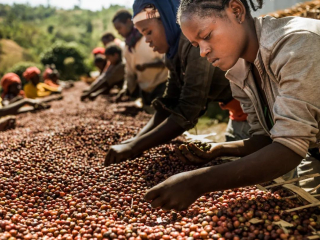
Introduction to the difference between coffee washing, honey treatment and sun exposure. The process of natural solarization (Natural/Dried-in-the-Fruit) is the simplest. The fruit begins the process of sun drying without treatment after picking. This is the oldest method of treatment in existence. This method is still used in places such as Ethiopia and Brazil. Natural solarization in the absence of water resources
The most common 4 kinds of treatment methods: sun, water, semi-water, honey treatment of the difference?
Coffee beans are commonly processed in four ways, namely, solarization, washing, semi-washing, honey treatment. Solarization: The cheapest, simplest, and most traditional method of processing coffee beans for strong aroma requires drying the whole coffee cherry. There are also many differences in the implementation of this process, depending on the farm

Unique Water washing, fermentation, Solar and low temperature drying treatment for Information material of Vescaya Manor in Guatemala
For the exchange of professional baristas, please follow the coffee workshop (Wechat official account cafe_style) Vescaya Manor (Guatemala Vizcaya) Vescaya Manor in Guatemala. Vescaya Coffee Manor is located in the earliest production area in Guatemala and has been famous for its high quality coffee for two hundred years. The coffee at Wiskaya Manor stretches from 1300 meters to 1800 meters above sea level.

Introduction of water washing method for the treatment of high-quality coffee and raw beans
Coffee washing began in the mid-18th century. In the washing process, the pulp of the coffee fruit (red cherry) is first removed, then the residual mucous membrane on the inner pericarp is removed by a fermentation tank, and the beans are washed and dried. The difference between the non-washing method and the water washing method is that the non-washing method is to remove the pulp after drying, while the washing method is to remove the pulp before drying. Washing can pass every step.
Coffee and bean honey treatment | Origin of honey treatment and half-sun treatment _ history story of honey treatment
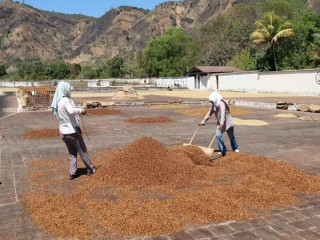
The honey treatment in the traditional treatment appears only after the sun and water washing. The earliest regions to use honey treatment are Costa Rica, El Salvador and other Central and South American countries. Its invention is inspired by the Brazilian half-sun method (peeling and sunbathing). The half-sun method in Brazil appeared because the raw bean treatment in Brazil was mainly used at that time.

Find the right coffee flavor from the treatment method
The harvest of fresh coffee, taking Yunnan as an example, three batches of harvest time: the end of October to the middle of December for early fruit, yield is less; the middle and late December to the end of January for coffee fruit concentrated maturity period, this batch of coffee overall quality is the best; into February the rest are mostly diseased fruit, yield is also very small. Coffee fruits are harvested one by one, and the ears cannot be picked down, and the stems behind the fruits cannot be pulled down (fruits).
What's the relationship between honey treatment and semi-sun treatment? What is the reason for the invention of semi-solarization.
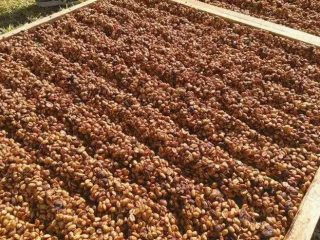
The first use of honey treatment in Costa Rica, El Salvador and other Central and South American countries, its invention inspired by Brazil's semi-sun method (peeling sun). Brazil's semi-solarization came into being because Brazil's green beans were treated mainly by traditional solarization, and its quality was better than Africa's elevated solarization at the same time.

What are the coffee beans grown in Yunnan that are treated with red wine
The red wine process is named after the process, and the red wine flavor process is named after the process results in full body, red wine fermentation flavor, low acidity and excellent sweetness. In the traditional green coffee process, whether it is washed, sun, or honey treatment, more or less fermentation occurs. However, the fermentation substances are different and the environment is different.

Is the fermented coffee better or fresh? Hambella Manor is the best batch evaluation.
For the exchange of professional baristas, please follow the coffee workshop (Wechat official account cafe_style) Ethiopia Solar Humbera Manor Benti Nenqua single-layer slow drying 121batches of Ethiopia Hambela Benti Nenqua G1 Natural SFP SLD Lot 121Hambela is an estate under METAD Agricultural Development PLC Company. Now

What are defective beans? how to calculate defective beans?
High-quality coffee beans are refined by water treatment. The coffee beans with less impurities can be obtained by the water washing method, but if the water quality and time are not properly controlled during the fermentation process, the coffee beans will easily be infected with the sour taste of excessive fermentation. and dry beans also need to pay attention to timely re-inspection to prevent coffee beans from being contaminated by wet ground and sundries. Processed
How to treat fresh coffee fruit into raw coffee beans
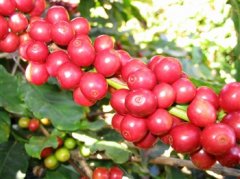
The variety of coffee treated with raw beans certainly determines the natural flavor, but the treatment of raw beans determines the acquired quality. Selected coffee attaches great importance to flavor and quality, so it pays special attention to the technology and details of processing. Harvest: the harvest method is one of the criteria for judging selected coffee. if calculated from the time of germination, Arabica coffee will take about 5 years to blossom and bear fruit. Brazil
Coffee technology processes fresh coffee fruits into raw coffee beans.
The variety of coffee treated with raw beans certainly determines the natural flavor, but the treatment of raw beans determines the acquired quality. Selected coffee attaches great importance to flavor and quality, so it pays special attention to the technology and details of processing. Harvest: the harvest method is one of the criteria for judging selected coffee. if calculated from the time of germination, Arabica coffee will take about 5 years to blossom and bear fruit. Brazil
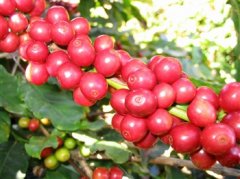
How to treat fresh coffee fruit into raw coffee beans?
The variety of coffee treated with raw beans certainly determines the natural flavor, but the treatment of raw beans determines the acquired quality. Selected coffee attaches great importance to flavor and quality, so it pays special attention to the technology and details of processing. Harvest: the harvest method is one of the criteria for judging selected coffee. if calculated from the time of germination, Arabica coffee will take about 5 years to blossom and bear fruit. Brazil

What is golden honey treatment? does the degree of golden honey treatment directly depend on the amount of pectin retained?
Professional coffee knowledge exchange more coffee bean information please follow the coffee workshop (Wechat official account cafe_style) honey treatment, almost synonymous with Costa Rica! Honey treatment was first born to improve the fermented water washing method, which has a history of hundreds of years; there are two kinds of water washing methods, one is the traditional water washing method which consumes a lot of water, and the other is in a mechanical way.

Several common methods for the treatment of coffee beans the processing of sun-cured coffee beans is so simple and rough.
Professional coffee knowledge exchange more coffee bean information please follow the coffee workshop (Wechat official account cafe_style) front street-coffee processing method introduction washing method: washed coffee accounts for 35% of the export. Good quality washed coffee is processed with freshly picked fully ripe fruit, picked carefully and closely monitored by professionals. The picked clean coffee beans were picked on the day of picking.
The process of turning fresh coffee fruit into raw coffee beans.
The variety of coffee treated with raw beans certainly determines the natural flavor, but the treatment of raw beans determines the acquired quality. Selected coffee attaches great importance to flavor and quality, so it pays special attention to the technology and details of processing. Harvest: the harvest method is one of the criteria for judging selected coffee. if calculated from the time of germination, Arabica coffee will take about 5 years to blossom and bear fruit. Brazil